Sitting in a railway station
Union Station in Chicago is a shrine to travel. It is sleek, white marble, the great hall unadorned by the clutter of shops and kiosks. In its grand simplicity, it is a portal for the world to pass through on its way to other places. Boston’s South Station, on the other hand, is a monument to the entrepreneurial spirit. It is so filled with high-end food shops, magazine booths, and flower stands, that the concept of a train station is obscured. There are no traditional benches, only tall tables with bar stools. With some hesitation, we piled our bags near one end, unsure if we were encroaching on some restaurant’s space. Ticket agents were not to be found. After an enquiry of a person in some kind of uniform, we were sent outside, to a back dock to check our largest bag. I felt like a delivery man being sent around back to the servants’ entrance. Lydia did not look pleased.
By nature, travelers are hunters and gatherers, so I watched the luggage while Lyd foraged for food. The train schedule dictated that we would miss lunch. Her, goal was to find nourishment to sustain us until dinner on the train. She returned with nuts and berries and, bless her heart, two giant iced coffees. With bodies and souls restored, we waited for the Lake Shore Limited.
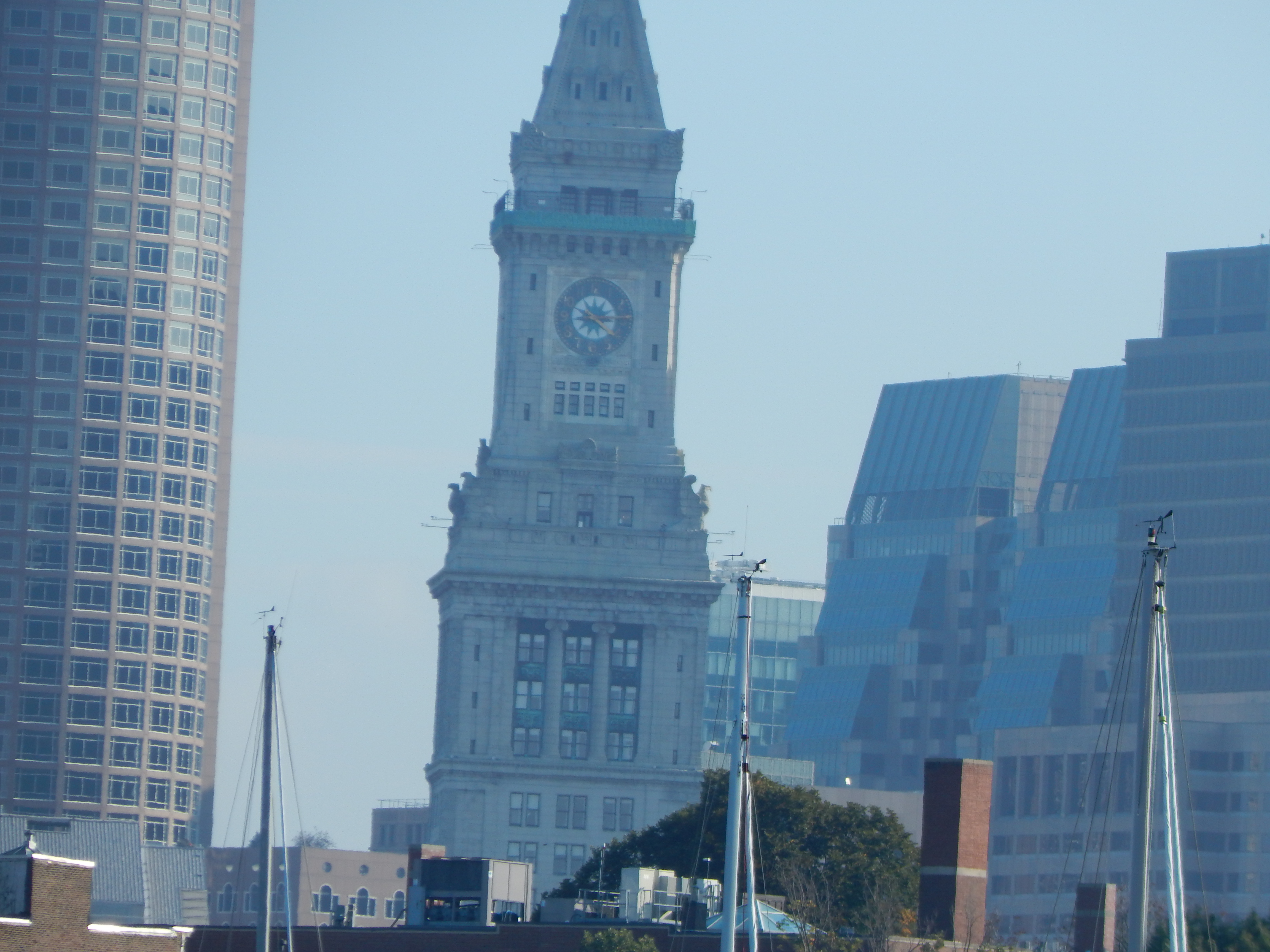
We left Boston in the rain, the tallest buildings rising into the overhanging fog, leaving only the monument on Breed’s Hill and the many church spires to delineate a skyline. Quixote-like we rode into the dim light of a Massachusetts, ready for our next adventure.
In our travels, we have found that adventure (read that word as problems, issues, situations, or disasters) is often thrust upon us by circumstances. We declined the offer of a packaged sandwich and bottle of water as a free late lunch. We would wait for dinner as we had just had a bite to carry us over. So it was that we rode into the darkness on a train that had no dining car. There was to be one later, we were told. It was part of the train that would join us in Albany at 6 o’clock, where it would take an hour to reconfigure the train. We began doing the math for an approximation of dinner time. Dinner would not start till after the trains were joined (7:00). There was usually a reservation list which bumped those in the smaller rooms (us) to the later meals (8:30 or 9:00). The odds of the train being on time were in inverse proportion to the current value of lead in Detroit’s water supply (a variable that might indicate the possibility of not eating at all). We are nothing if not troopers and began searching our bags for gum drops, M&Ms, and stray breath mints. We rode into the woods of the west confident in our survival.
It was dark when we arrived in Albany, New York. An attendant promptly marched down our corridor exclaiming loudly that we were to follow her to the adjacent train. We were to be fed immediately. Lamblike we followed her from our train across the dark rainy platform to another train. It was dark inside. There was no electricity. We read our menus by the glow of our cell phones. The couple seated opposite us were growing increasingly distressed. Marched from their room, they had come away without the husband’s oxygen machine. His blood oxygen level was falling fast, he was turning blue, losing consciousness. She seemed insistent that she place her drink order before she returned for his oxygen. That done, she scurried away, leaving us with her increasingly blue spouse. She returned with his equipment as the electricity came on. He began to recover, ordered the fettucine, and ate most of his wife’s mashed potatoes also. We left them with their puddings, enquired where our room was currently located (remember that two trains had been joined and reconfigured during our repast) and retired.
Our adventures often tell us more about ourselves and how we handle difficult situations. This adventure left me with questions about others. Why had the conductor elected to send us to a dining car that had no ability to feed us? Why not wait until the cars were connected? Why did the couple forget something as critical as an oxygen machine and why was it so important to place an order for coffee and ice tea before retrieving it? And most important to my thinking, why didn’t he just order the mashed potatoes if he wanted them.
Travel leads us to hard questions; it does not always lead us to answers.

 barelyaboomer