Washington D.C. I
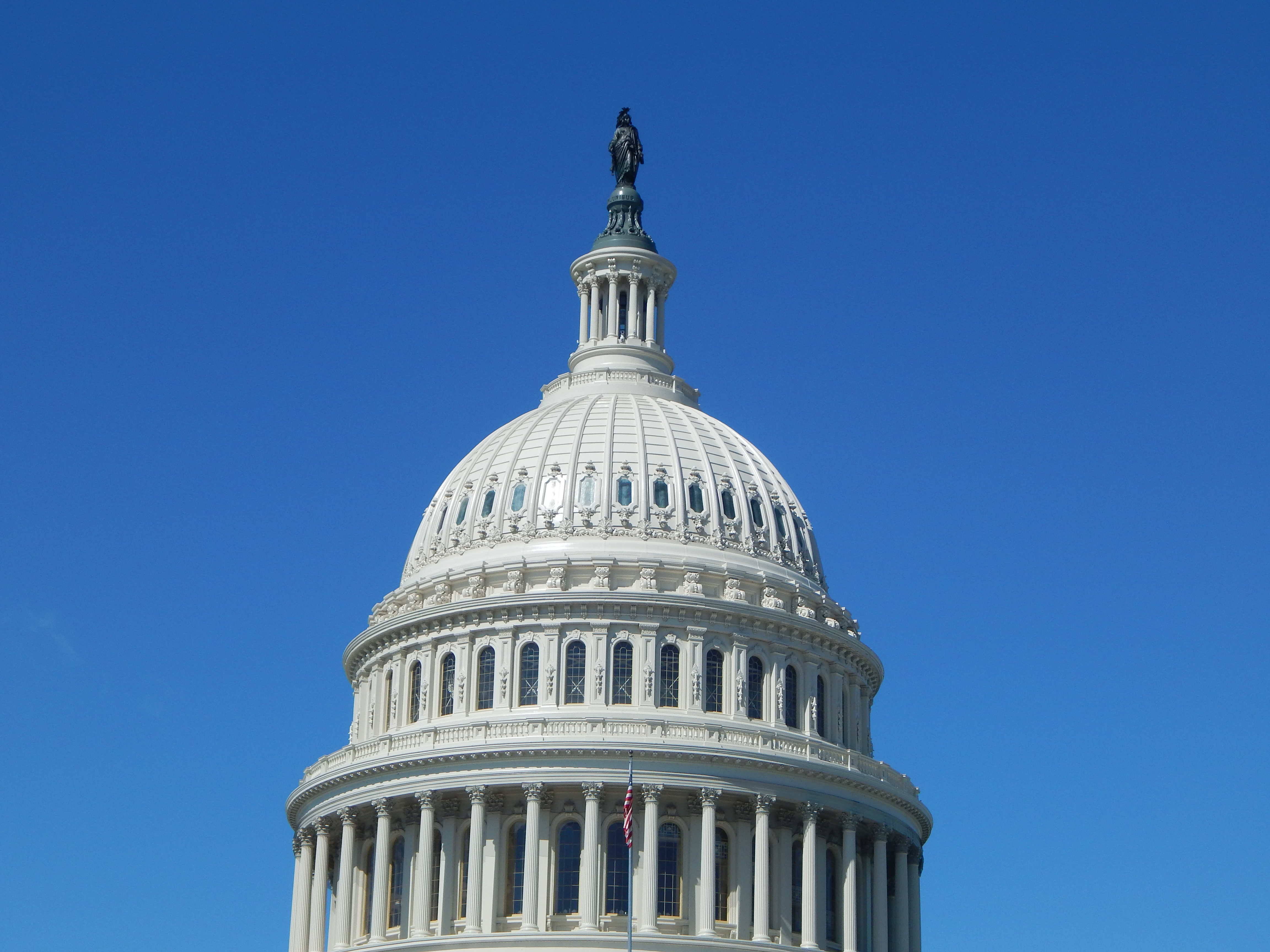
Washington D.C.is evocative. Since starting school, the images of the Washington Monument, the Lincoln Memorial, and the Capitol Building have been part of our schooling, and culture. They are the icons of who we are and what we’ve accomplished as a people. To see them in person is akin to the Moslem visiting Mecca. One expects to be inspired and transcended.
We rolled into D.C. mid-morning. It was starting to rain. From the train, we caught brief glimpses of the Washington Monument, the Capitol Building, and other buildings with columns. (It does not take long to discern that columns, by themselves do not distinguish one building from another. In Washington, any building of importance, and many that lack importance, have columns.) We disembarked in Union Station (note that every train station of any size is called Union Station), with a grand hall whose mezzanine featured an army of statues gazing down upon us. We quickly found a Yellow Cab, (note all of the Yellow Cabs in Washington are red), and found our way to another boutique hotel, this one called the Henley Park. We hunkered down for an afternoon of rest and reflection, which was capped by a supper of hors d’oeuvres and cocktails in the bar downstairs.
The hotel was in what I would call a typical urban setting. We were surrounded by tall buildings and honking horns. Looking out of our window, we could have been in any city in the U.S. Nowhere in sight were the long, expansive parklike settings of the Mall and Reflective Pond. This was not the city I had envisioned. I had pictured a long expanse of low buildings, monuments prominent across the skyline, unobscured by tall hotels and office building, where nothing blocked the symbols of our struggle and accomplishment. I was wrong.
Washington is in the South and was humid and stuffy, but the night lacked the somnolence of New Orleans. We fell asleep to a symphony of traffic and sirens.
We had planned a bus tour of the city for the next day, hoping to catch a glimpse of many, if not most, of the significant sights (the bus driver called them attractions, although I cannot conceive of the Lincoln Memorial or any other memorial as an attraction — it would be akin to considering my grandmother’s grave an attraction). I was surprised, because I was the one who had reserved the tickets, that the first stop was an extended tour of the Capitol. I am not capable of long walks anymore, but this tour was worth the effort. We saw the “old Senate Room” which was later used as the site of the Supreme Court. We were stunned by the small size of the room. It was the size of a conference room of any business in America, and it made us realize how humble our country’s beginnings were. When the Supreme Court conducted business there, couches faced the four attorneys’ tables, their backs to the Justices, so that ordinary citizens could sit and listen to the arguments of the attorneys.
Later, we walked through the “new” old Senate room where Senator Charles Sumner was caned and nearly killed after giving a pro-abolition speech. In the old House of Representatives, we saw the desk where John Quincy Adams had a stroke. He was carried to an upper room and died two days later. It was all very real and personal. It had more of the sensibility of a story about grandpa than a story from a social studies book. It was visceral.

 barelyaboomer