Washington D.C.II
Agriculture, Education, Treasury, F.B.I., the great, gray, giant buildings began to meld together after a while as our bus wound its way through afternoon traffic, the driver seeming to obey unwritten rules allowing him to straddle lanes and park where ever he wanted. We goggled out the window like true rubes while a fellow traveler two rows ahead surreptitiously spit tobacco juice into a used coffee cup.
We had lunch in the food court of the Ronald Reagan building a block from the White House, which was the reason for our stop. We opted for sandwiches rather than architecture, the White House having little cachet for us these days. Entering the Reagan building, Security pulled me aside after exiting the metal detector. I had not heard it “ding” when I passed through and was surprised when I was made to stand with my arms straight out while an officer “wanded” me. It was a physical reminder that the America of today is not the America of my youth. In truth, I believe I was profiled, that the fact that I was a 5’5” senior, tubby, gray haired and bearded, Caucasian male using a cane, raised flags. I was happy to have avoided the cavity search when I was released to get my lunch in the food-court.
Having re-carbed, our driver took us across the Potomac River, to a knoll overlooking the Pentagon. The knoll is the home of the Air Force Monument, but on the backside, we could look down on the Pentagon (take that line how you will). The driver pointed to a section of discolored marble where an airliner had crashed into the Pentagon on September 11. In truth, I could not spot the discoloration because I was distracted by the driver, who chose that moment to give a sales pitch about the book with colored images of the monuments in the city, which he was selling for only $10. This included a removable postcard of the Martin Luther King memorial. With mixed emotions, we got back on the bus.
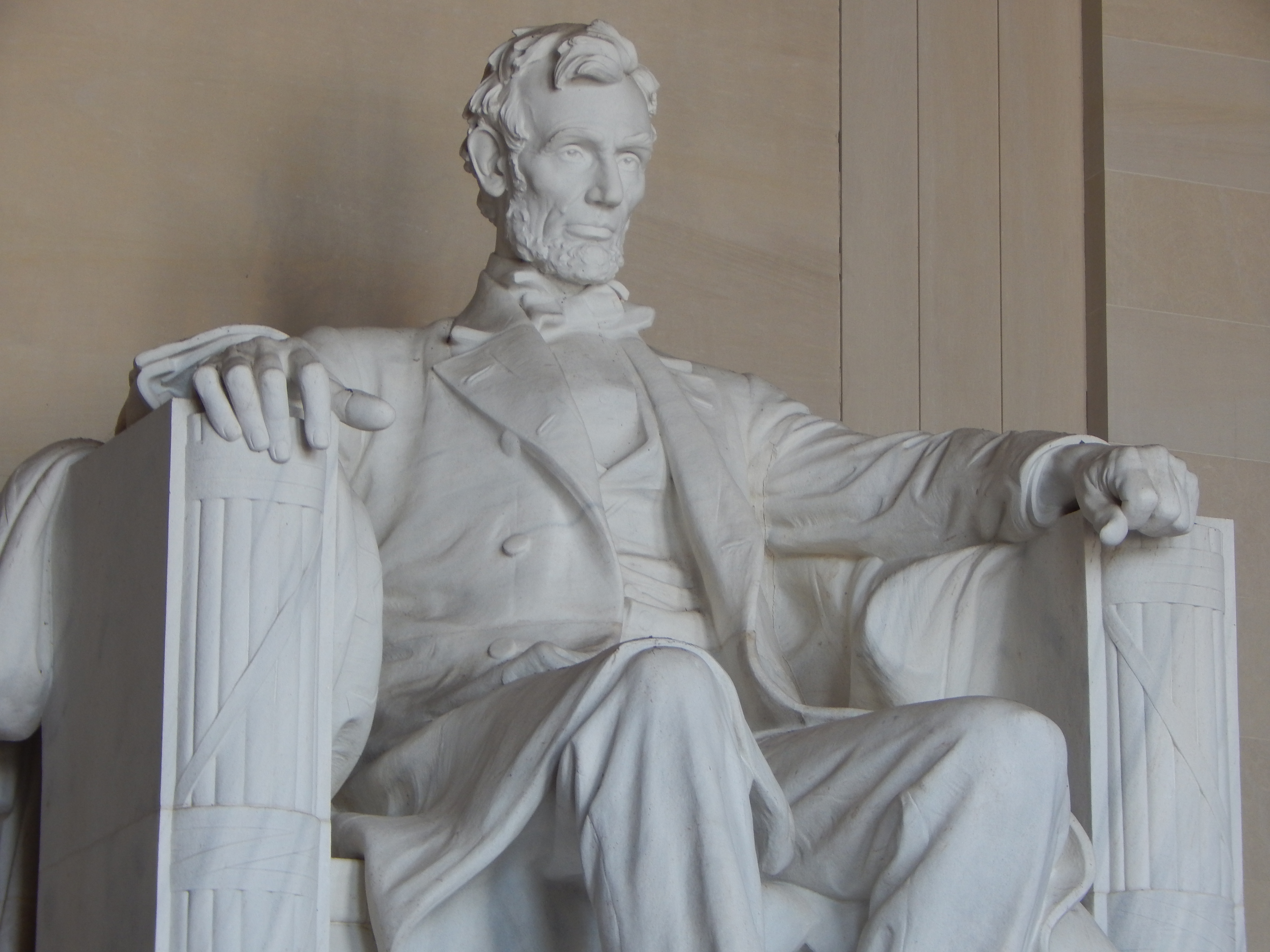
As we approached the Lincoln Memorial, the Washington D.C. that I had imagined appeared. In a wide, green expanse, flights of marble steps rose to meet the pure white columns of the monument. I opted for the elevator, Lydia chose the steps. The elevator was out of order, so less willingly, I too took the steps. I leaned against a column at the top waiting for the wheezing to stop and the colored spots in my vision to clear. Lydia found me and together we turned and stood in silence to stare up at Mr. Lincoln. There were tears in our eyes.
(I was 11 when the centennial of the Civil War began to be celebrated. For four years our newspaper carried articles and portions of diaries daily pertaining to events of the war. The Civil War became my passion. My fifth-grade teacher, recognizing a teaching opportunity, gave me reproduction copies of Harper’s Weekly. I still have them someplace. I memorized the Gettysburg Address on my own. I can still say it entirely.)
We have shared many special moments on this trip across America, but I believe that standing at the foot of Mr. Lincoln’s chair was the highlight for us, the time we will remember the most, knowing how we felt just then as we stood looking up at him. And yet, he was not real to me until the next day at The Smithsonian, where, in a small glass display, sitting on a tiny hallway table was an old, threadbare and discolored top-hat. It made Mr. Lincoln real to me. It was the hat he wore to Ford’s Theater.